
Lauderdale County Arrest Records and Court Charges
A Lauderdale County arrest record documents an arrest itself. It names the person taken into custody, the agency that made the arrest, the booking date, and the initial charge wording. The Sheriff's Office books people into the detention center and logs that intake on its inmate roster. That roster is the booking side of the story. It shows a snapshot of custody, not the final word on what a court will decide. For the jail roster, booking number, and live custody status, the Lauderdale County inmate records cover that ground in full.
The court charge record is a different file. After an arrest, the District Attorney reviews the facts and decides the formal charges. Those charges after arrest are filed with the court clerk and tracked through the case. A charge can be amended, reduced, or dropped before it ever reaches a trial. The arrest is one event. The charges live on as the case proceeds. The complete case file, with pleas, disposition, and sentencing, sits with the Lauderdale County criminal court records.
So two records describe the same incident. One captures the arrest and the booking. The other captures what the state chose to prosecute. They often carry different charge wording, and they update on different timelines.
How to Find Lauderdale County Arrest Records
Charges appear in more than one place as a case develops. The first charge wording often shows up on the Sheriff's inmate roster right after booking. Formal court charges appear in the case file kept by the Circuit Clerk or County Court Clerk. Mississippi Electronic Courts, the state judiciary's online case system, hosts many Circuit, County, and Chancery filings, though access can require registration. When a record is not online, the clerk who holds it can confirm what was filed.
- Start with the inmate roster for the booking charge if the arrest is recent, and note the booking number and arrest date.
- Search the court case index by the defendant's full name or by the case number.
- Open the case and read the full charge list, since one arrest can carry several separate charges.
- Check each charge for its statute code, severity level, and current status.
Justice Court is another front door. The county Justice Court handles initial appearances, bond hearings, county misdemeanors, and arrest warrants, so early charge activity often lands there first. City citations and ordinance charges run through Meridian Municipal Court instead. For charges that ended in a state prison term, the record rolls up into statewide corrections files.
When a charge record is not posted online, a direct request fills the gap. The clerk who holds the file can confirm what was filed and provide a certified copy. A written public records request should name the defendant, the rough date, and the court level, then include payment and a stamped envelope where the office asks for one. The right office depends on the charge: the Circuit Clerk for felony and County Court matters, and Justice Court for county misdemeanors and traffic.
How Charges Get Filed After an Arrest
The path from arrest to filed charge follows a set route. An officer books the person and lists a charge. Justice Court then holds an initial appearance, sets bond, and may hold a preliminary hearing. The District Attorney for the 10th Judicial District, Kassie Coleman, reviews felony cases and decides what to charge. Serious felonies go to a grand jury, which can return an indictment in Circuit Court. The District Attorney's Office drives these felony charging decisions. The charging document is what formally opens the court case.
| Complaint | Information | Indictment | |
|---|---|---|---|
| Filed By | Officer or prosecutor | Prosecutor | Grand jury |
| Common For | Misdemeanors | Some felonies | Serious felonies |
| Typical Court | Justice or Municipal | Circuit or County | Circuit Court |
| Begins | The case at first appearance | The case by sworn charge | The case by grand jury vote |
A grand jury can carry a heavy load. One Lauderdale County grand jury returned indictments in 95 cases over two days and declined to indict six others. Each indictment is a charging document that names the offense and starts a felony case in Circuit Court.
Charge Status in Lauderdale County Cases
Charges rarely stay frozen. They shift as the case moves through review and court hearings. A prosecutor may add a count, reduce a felony to a misdemeanor, or drop a charge that the evidence will not support. The status column on a court record tells the reader where each charge stands right now.
| Status | What It Means |
|---|---|
| Pending | The charge is filed and active. No final outcome has been reached. |
| Amended / Reduced | The charge was changed, often lowered to a lesser offense after review or plea talks. |
| Dismissed | The court ended the charge. It may be barred for good or open to refiling. |
| Nolle Prosequi | The prosecutor chose not to pursue the charge, dropping it from the case. |
The booking charge on the roster is the least settled of all. The Sheriff's roster warns that charges and bond amounts can change after a court appearance. A roster entry might read "probation violation," yet the court file may show a fuller and more exact set of charges. Always treat the court record as the better guide to what stands.
Note: Confirm current charges and bond with the detention center before acting on a roster entry, because live custody data may not reflect the latest court ruling.
Charges vs Convictions
Being charged is not the same as being convicted. A charge is an accusation. A conviction is the result after a plea or a verdict. Many charges never become convictions. They get reduced, dismissed, or dropped along the way. Reading a charge record as proof of guilt is a common and costly mistake.
| Charge | Conviction | |
|---|---|---|
| Stage | Accusation | Verdict or plea |
| Burden of Proof | Probable cause | Beyond a reasonable doubt |
| Who Decides | Officer, prosecutor, grand jury | Judge or jury |
| Public Record | Yes | Yes |
The gap matters in real life. An arrest and a filed charge can show up long before any court has weighed the proof. Anyone reviewing a record should check whether a final disposition exists and what it says.
Lauderdale County Charge Codes and Severity
Each charge ties to a section of Mississippi law. The statute number tells which offense was alleged, and the severity level tells how serious the law treats it. One arrest can produce several charges at once, each with its own code and level. A record may list a felony count next to a misdemeanor count from the same incident.
- Felony
- The most serious class of offense, carrying the heaviest penalties and often prosecuted in Circuit Court.
- Misdemeanor
- A lesser offense usually handled in Justice or Municipal Court, with lighter fines or jail terms.
- Ordinance Violation
- A breach of a city or county rule, typically a low-level municipal matter rather than a state crime.
The level shapes where the case is heard and who prosecutes it. Felonies route through the District Attorney and often the grand jury. Lower charges move faster through Justice Court or Meridian Municipal Court. The same statute can appear with different severity tags depending on the facts and any prior record.
Reading the code matters when records seem to disagree. The booking charge may use plain words like "drug possession," while the court file cites a precise statute and degree. Both can describe the same act. A reduced charge will carry a new code that points to the lesser offense, which is why the court record, not the arrest entry, is the surer source for the charge as it now stands.
Statewide Charge and Criminal History Lookups
Some charges end in a state prison sentence, and at that point the record moves beyond county files. The Mississippi Department of Corrections runs a search for sentenced state prisoners. The MDOC inmate search looks up offenders by name or by MDOC number.
It helps when a person is no longer held in the Lauderdale County detention center but is serving a state term.
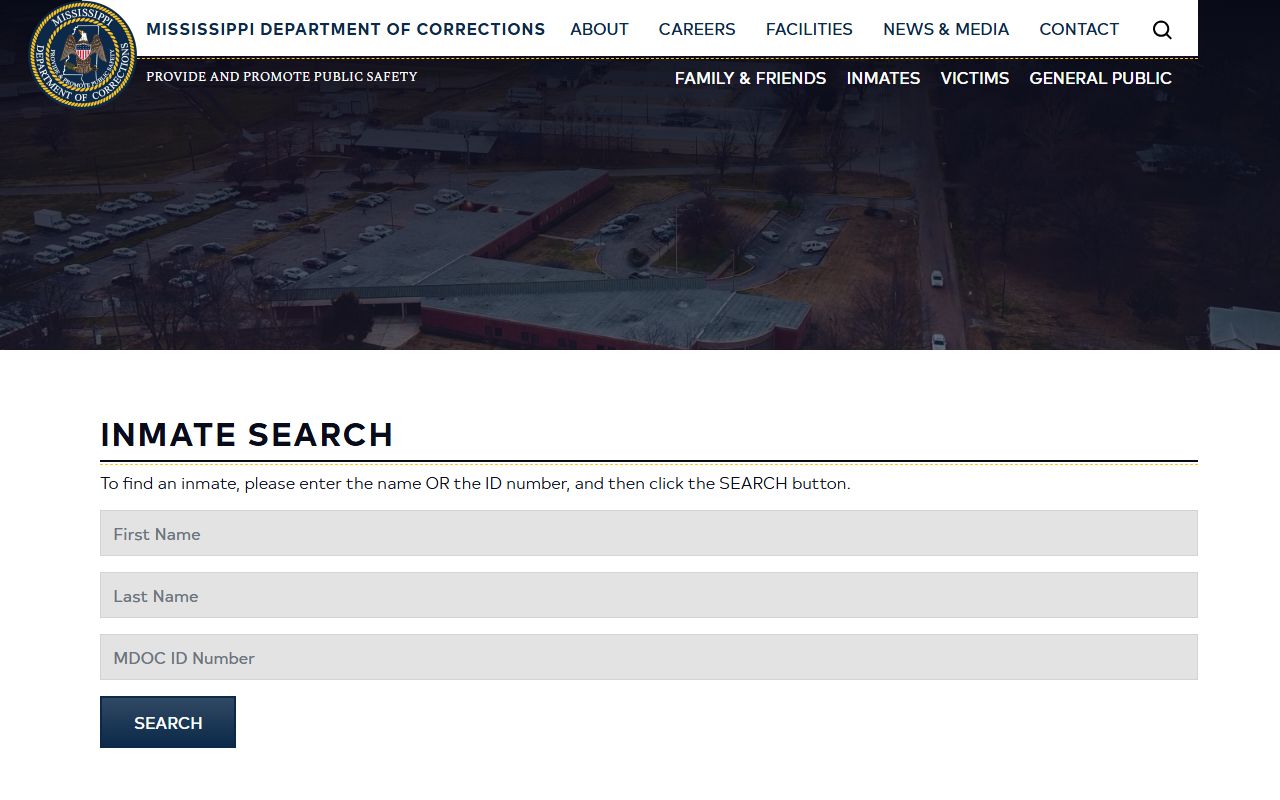
A second state portal offers the same lookup with a clear set of search fields. The MS.gov MDOC inmate search form asks for a last name, a first name, or an MDOC ID number.
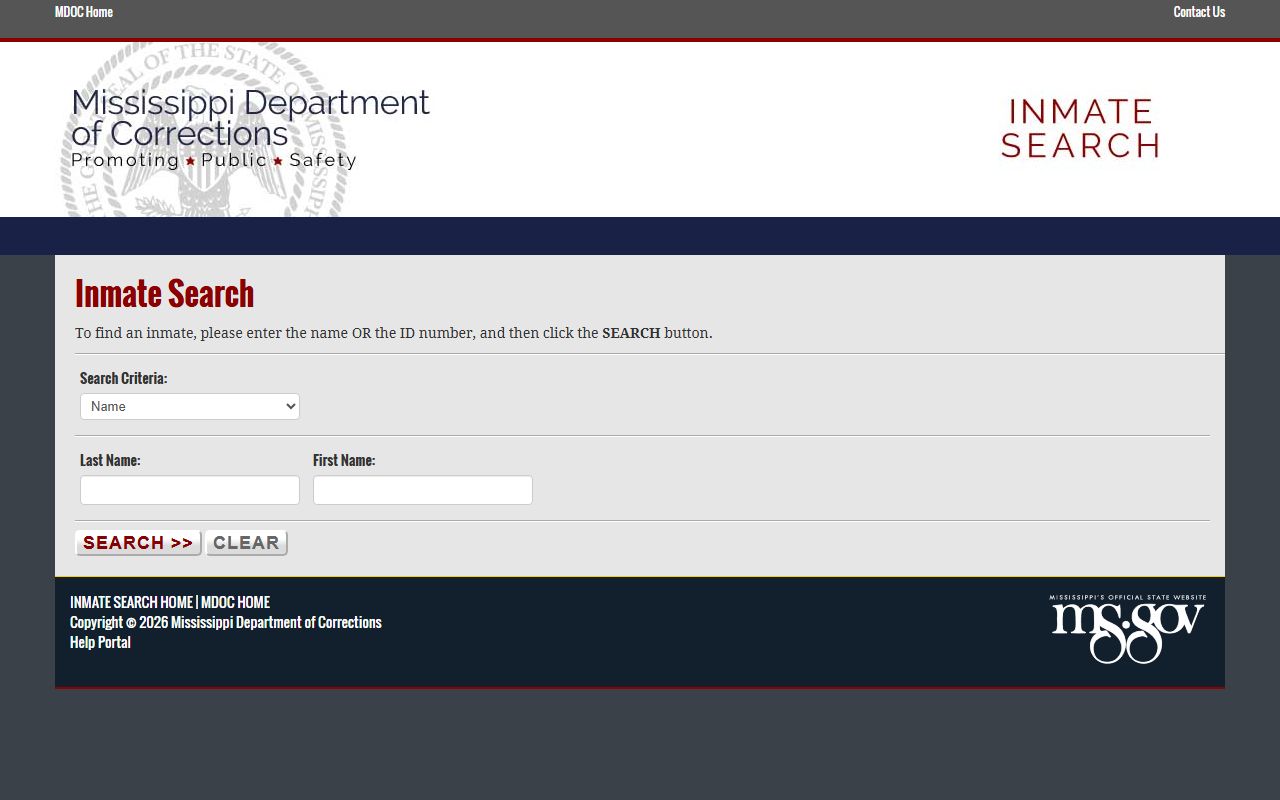
These tools cover sentenced state inmates, not county pretrial detainees. For a full criminal history, a fingerprint-based check reaches further than any single county index. The Sheriff's Office notes that a local background check returns only Lauderdale County arrest results, while a nationwide check requires fingerprints.
Note: A statewide corrections record reflects a sentence already imposed, so it will not show a charge that is still pending in a Lauderdale County court.
Background Checks and Lauderdale County Arrest Records
There is a real difference between a casual lookup and a formal background check. Anyone can read a public charge record online. A regulated background check used for hiring, housing, or credit follows federal rules and must come from a licensed consumer reporting agency. The Sheriff's FAQ explains that its local check covers Lauderdale County arrest results only, with a small fee, while a nationwide check is done through fingerprints.
That distinction protects people. A dismissed or amended charge can linger in a casual search even after a court has cleared it. Decisions that carry legal weight should rest on a current, certified record, not a quick web result.
Important: This site is not a consumer reporting agency under the FCRA, and its records may not be used for hiring, housing, credit, or other regulated screening decisions.
Restricted Charge Records in Lauderdale County
Not every charge record is open to the public. Mississippi law shields several categories. Charges against juveniles run through Youth Court and stay confidential under Section 43-21-261, except where a statute or court order allows release. Sealed and expunged records also fall outside ordinary public access. Active investigative reports held by law enforcement are exempt under Section 25-61-12, even though basic incident reports remain public under the Mississippi Public Records Act.
- Sealed
- A court order hides the record from public view, though some agencies keep limited access for narrow legal uses.
- Expunged
- An eligible record is removed and, in the eyes of the law, treated as if the charge never happened.
Expungement runs through the court that handled the case, under Section 99-19-71, and eligibility depends on the offense, the outcome, and the person's prior record. A charge that was dismissed or ended in no conviction may qualify. A missing record does not always mean nothing happened. It may be sealed, expunged, filed under another court level, or simply outside the date range searched. When the public file falls short, a written request to the office that holds the record is the next step.