
How Warrant Records Work in Lauderdale County
A warrant is a court order. A judge signs it, and it directs law enforcement to act. In Lauderdale County, the Justice Court issues arrest warrants tied to county misdemeanors, traffic matters, and bond hearings. The Circuit Court issues process and warrants in felony and higher cases. The Meridian Municipal Court handles city bench warrants. Once a judge grants a warrant, the Lauderdale County Sheriff's Office verifies that it is on file, then works to locate and arrest the named person.
Because the warrant lives with the court and the sheriff, there is no one combined feed for the public. The sheriff's site offers a Most Wanted feature, but that is a short list of named fugitives, not a full warrant database. For most people the real question is simple. Which court has my warrant, and how do I confirm it without making things worse?
No public online warrant lookup. Lauderdale County does not publish a comprehensive active-warrant search, and the Sheriff's Office states that warrant information is not available by phone. To confirm a warrant, you must use a court or in-person channel, not a call for status.
Types of Warrants in Lauderdale County
Not every warrant means the same thing. The label points to how the warrant started and which court holds it. That matters because the place you go to resolve it follows the warrant type. Most local warrants fall into a few clear groups.
- Arrest warrant - authorizes police to take a named person into custody, usually after a sworn complaint or a judge's review of the facts.
- Bench warrant - issued by a judge from the bench, most often after a missed court date or a failure to comply with a court order.
- Capias / failure to appear - a court process ordering a person taken into custody, common when someone skips a hearing or does not pay as ordered.
- Search warrant - authorizes officers to search a place or item for evidence; it is not a command to arrest a person.
Arrest and bench warrants drive most lookups. A capias often shows up in traffic and fine cases when a payment or appearance is missed. Search warrants rarely concern the average person checking their own status.
How to Check for a Lauderdale County Warrant
With no single database to query, checking a warrant means working the right channel for the charge. Start with the court most likely to have issued it, then confirm in person if needed. The steps below follow the path the Sheriff's Office and county courts actually use.
- Identify the likely court. County citations, misdemeanors, and bond matters point to Justice Court. City tickets point to Meridian Municipal Court. Felony cases point to Circuit Court.
- Contact the clerk for that court to ask about an open warrant or a missed-appearance bench warrant on a known case number.
- If you cannot confirm by court, approach a law enforcement officer in person and ask. The Sheriff's FAQ directs people to this path because phone disclosure is not offered.
- For process questions about a warrant someone filed against another person, the Sheriff's Office handles updates and changes at 601-482-9804.
- Do not treat the lack of an online listing as proof you are clear. The absence of a public database does not mean no warrant exists.
Each court keeps its own records, so a Justice Court clerk will not have a Municipal Court warrant and the reverse holds too. When in doubt, check more than one court if your situation could touch both county and city charges.
Which Court Holds the Warrant
Matching the warrant to the court is the heart of any Lauderdale County warrant check. Each court covers a different slice of cases, and each has its own contact line. The table below maps the common warrant types to the office that issues and holds them.
| Court | Warrant Types | Contact |
|---|---|---|
| Justice Court | County misdemeanors, traffic, DUI, bond and failure to appear | 601.482.9879 |
| Circuit Court | Felony case warrants, process, and higher-level matters | Circuit Clerk 601.482.9731 |
| Meridian Municipal Court | City bench warrants from missed municipal or ordinance court | Courts and Records 601.485.1836 |
The Justice Court conducts initial appearances, bond hearings, and issues arrest warrants. The Mississippi Public Records Act presumes court records are open unless another law makes them confidential, so a clerk can often confirm a non-sealed case. Felony warrants flow through the Circuit Court, where the case file also lives. For the full case history behind a felony warrant, the Lauderdale County criminal court records tie the warrant to charges and outcomes.
What a Lauderdale County Warrant Record Shows
Because no public warrant search form exists for the county, there is no field-by-field lookup screen to walk through. When a court or officer confirms a warrant, the underlying record still carries a standard set of details. These are the fields that define an active warrant and the information staff use to verify it.
| Field | What It Shows |
|---|---|
| Warrant Type | Arrest, bench, capias, or search warrant. |
| Issuing Court | Justice, Circuit, or Meridian Municipal Court. |
| Subject | The named person, with identifiers used to confirm a match. |
| Issue Date | The date the judge signed and entered the warrant. |
| Underlying Charge | The offense or statute that prompted the warrant. |
| Bond Amount | The set bond, if any, for release after arrest. |
| Status | Active, served, recalled, or otherwise resolved. |
Bond and charge data can shift after a court appearance. Roster figures shown after an arrest may not match the final order, so the bond on a fresh booking is not always the bond a judge ultimately sets.
Note: A warrant record reflects an accusation and a court order, not a finding of guilt, and many details stay private until the warrant is served.
Most Wanted and the Sex Offender Registry
Two public-safety tools sit alongside the warrant process, though neither replaces a true warrant search. The Sheriff's Office posts a Most Wanted feature behind a disclaimer screen that you must accept before viewing. It lists named fugitives the office is actively seeking, not the full set of open warrants. The disclaimer warns that addresses may be inaccurate due to reporting or public-record errors, so the listing is a tip resource, not a verified profile.
A related statewide lookup is the sex offender registry, which the public can search directly. The Mississippi Sex Offender Registry lets anyone search by name or area to find registered offenders across the state, including Lauderdale County.
View the statewide registry to run a name or location search for public-safety information.
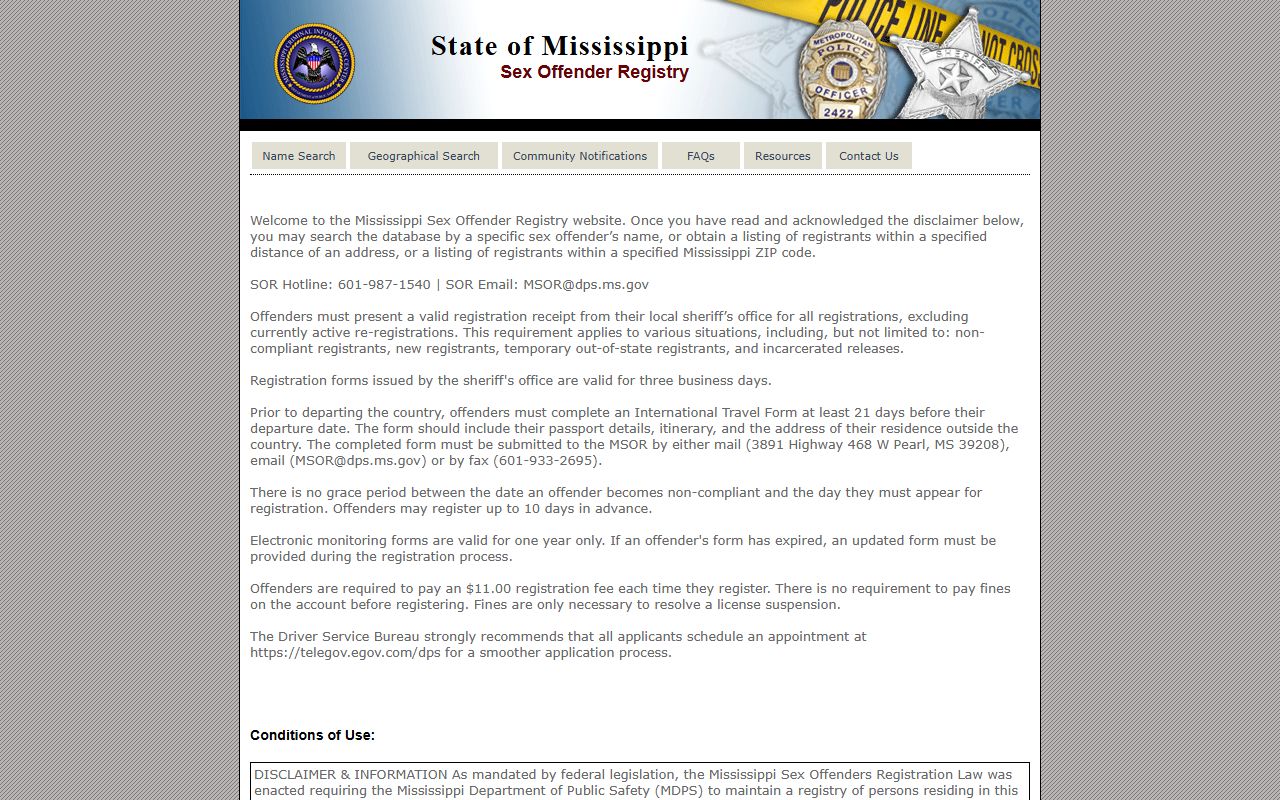
The registry is a public database, unlike warrants, so it offers a reliable name search where the warrant system does not. It does not show pending warrants, and a person on the registry may have no open warrant at all.
What to Do About a Lauderdale County Warrant
Finding out you may have a warrant is stressful, but a calm, ordered response protects you. Acting through the right court, with advice when the stakes are high, beats waiting and risking arrest during a routine stop. The steps below follow the resolution path the county and sheriff outline.
- Identify the court. Justice Court for county citations, misdemeanors, and bond hearings; Meridian Municipal Court for city citations; Circuit Court for felony case warrants.
- Do not rely on the absence of an online listing. The county does not publish a comprehensive active-warrant lookup, so silence online is not clearance.
- Appear through law enforcement or court channels when it is safe and appropriate, since the Sheriff's FAQ points people to officers because phone disclosure is unavailable.
- Contact an attorney before surrender if the warrant may involve a felony, bond revocation, probation violation, or an out-of-county or out-of-state hold.
- Confirm bond and case numbers with Detention Center staff at 601-482-9801 after booking or appearance, because roster bond data can change after court.
For a misdemeanor traffic warrant, clearing the underlying citation through the issuing court often resolves the bench warrant at the same time. Felony and probation matters are different and should not be handled alone. Booking detail and bond status after an arrest appear in the Lauderdale County inmate records.
Important: Speak with a lawyer before turning yourself in on any felony, probation, or bond-revocation warrant, since surrender terms and bond conditions can affect the case from the first hour.
Restricted Lauderdale County Warrant Records
Not every warrant is open to the public, and several categories stay private by law. Sealed warrants and warrants tied to an active investigation are commonly withheld, since the Public Records Act exempts investigative material in law enforcement possession even though basic incident reports remain public. Disclosing a sealed warrant early could let a person flee or destroy evidence.
Juvenile warrants follow separate confidentiality rules. Under Mississippi Code Section 43-21-261, youth court and related law enforcement records involving children are generally confidential, with release allowed only by statute or court order. Federal warrants are another track entirely and are handled through federal courts and agencies, not the county sheriff or local clerks.
When a warrant record is exempt, the holding office may still release a redacted incident report or confirm only what the law allows. A written public-records request to the office that holds the file is the formal route, but expect denials or redactions where confidentiality applies.