
Probate Records in Lauderdale County Chancery Court
Mississippi keeps a separate equity court for family and property matters. That court is the Chancery Court, and it is where every Lauderdale County probate case is heard. The Chancery Court handles wills, estate administration, guardianships, conservatorships, and mental health commitments. It also keeps a record of all wills and documents filed in cases brought before it. Adoption and family matters run through the same court, which is why some probate-related files carry strict privacy rules.
Probate touches more people than most court topics. A death in the family, a parent who can no longer pay bills, or a minor who inherits property can all lead to a Chancery filing. The Chancery Clerk, Carolyn Mooney, serves as the clerk of court for these cases and stores the paper and electronic files. Chancery Judges Amanda T. Rainey and Austin C. Terry preside over the hearings, with Court Administrator Brandi Coghlan managing the docket.
Older probate files do not stay at the courthouse forever. After a set period, the Chancery Court retires its records to the County Archives on Constitution Avenue. So a search may start at the clerk's counter and end at the archive, depending on the age of the case.
Probate Terms Defined
Probate paperwork uses words that rarely come up in daily life. A quick guide makes the filings easier to read and helps a searcher ask the clerk for the right document. These terms appear across wills, estate files, and guardianship petitions in the Chancery Court.
- Testator
- The person who made the will. A testator names who should receive property and who should manage the estate.
- Executor
- The person named in a will to carry out its terms, gather assets, pay debts, and distribute what remains.
- Administrator
- The person the court appoints to settle an estate when there is no will, or when no named executor can serve.
- Intestate
- Dying without a valid will. State law then decides who inherits the estate.
- Estate
- All the money, land, and property a person leaves behind, along with any debts owed.
- Guardianship
- A court arrangement that gives an adult legal authority over a minor or over the personal care of someone who cannot decide for themselves.
- Conservatorship
- A court arrangement that puts a responsible person in charge of the finances and property of someone unable to manage them.
How to Access Lauderdale County Probate Records
There is no single online database that returns a full probate case file in Lauderdale County. Most searches start with a phone call or a visit to the Chancery Clerk. The clerk can confirm whether an estate, will, guardianship, or conservatorship exists and can pull the file for inspection. A free online portal handles recorded land instruments, which helps when an estate involves real property, but it does not replace the case file.
Mississippi treats court files as public records under the Mississippi Public Records Act, which sets timing and access rules for the offices that hold them. The official record of access and timing rules is published by the state ethics commission.
The state page below explains how a public body must respond and when it may redact exempt material before release.
See the access and timing section of the Public Records Act for the full text that governs probate file requests.
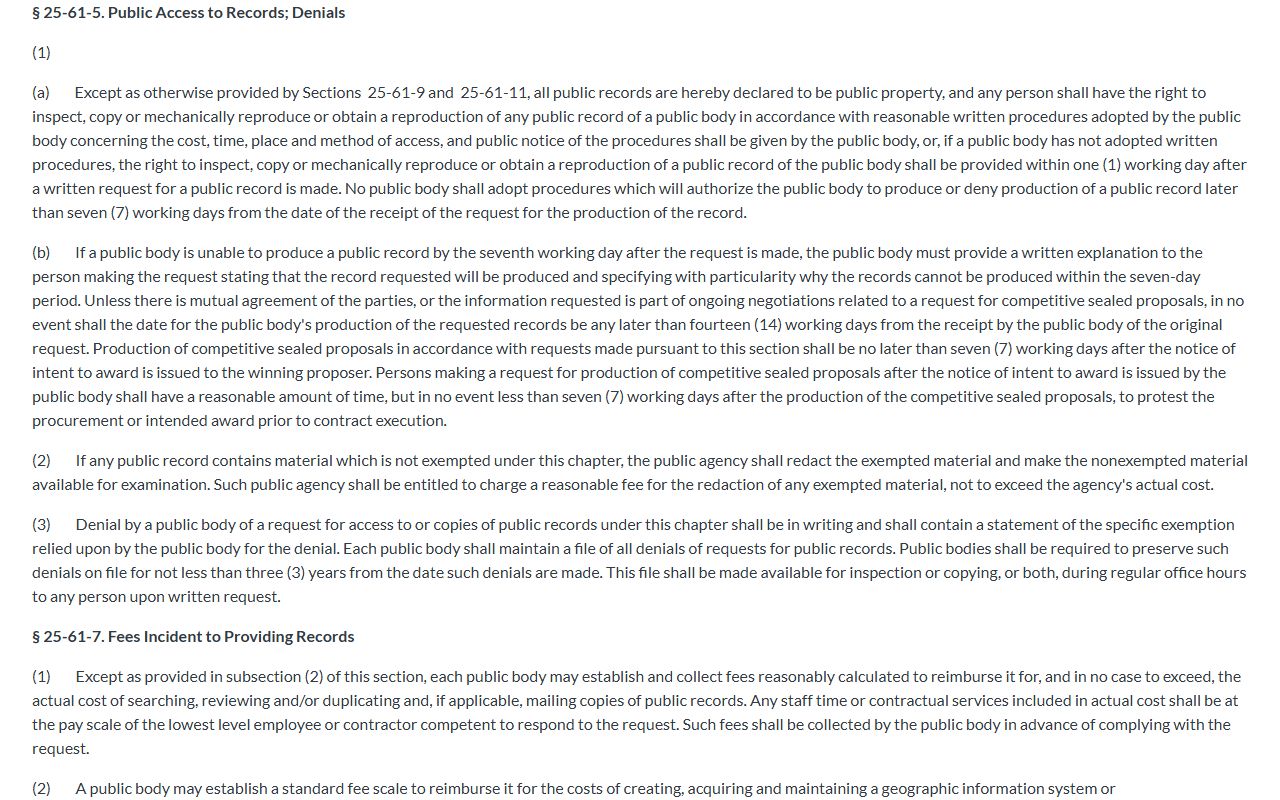
Under those rules, a Lauderdale County office generally cannot delay a probate record beyond seven working days without a written reason, and it must release the nonexempt parts of a file even when some pages are sealed. The steps below outline a practical search.
- Decide what you are looking for: a will on file, an open or closed estate, a guardianship, or a conservatorship.
- Contact the Chancery Clerk and give the decedent or party name, plus an approximate date if you have one.
- If the estate involves land, search the Chancery Official Records Inquiry portal by party name, book and page, or parcel for deeds, liens, and recorded instruments.
- Ask the clerk to inspect the file at the counter or to quote copy and certification fees for a mailed request.
- For older cases that have retired, contact the County Archives with the name, case type, and approximate year.
Note: A missing record does not always mean no case existed, because a file may be sealed, retired to archives, or indexed under another spelling.
Lauderdale County Probate Offices
Two offices hold most probate material in the county. The Chancery Clerk keeps active and recent files at the courthouse complex on Courthouse Boulevard. The County Archives stores retired files and historical court records on Constitution Avenue. The contact details below cover both, along with the public inspection hours the county publishes.
Chancery Court and Chancery Clerk
Carolyn Mooney, Chancery Clerk
2600 Courthouse Blvd.
Meridian, MS 39301
601.482.9701 / 601.482.9720
Judges: 601.482.9729
Mon to Fri, 8:00 a.m. to 5:00 p.m.
Lauderdale County Archives
Leslie Joyner, Records Manager
500 Constitution Ave.
Meridian, MS 39301
601.482.9752
archives@lauderdalecounty.org
The Chancery Court page notes that wills and case documents are kept by the court and then retired to the archive after a time. That retention path is why genealogists and estate researchers often need both contacts. The clerk's office also points to the chanceryclerk@lauderdalecounty.org address for general questions, and the county FAQ lists a separate Chancery vault line at 601.482.9711 for land and probate file lookups.
Lauderdale County Probate Copy Fees
Copy and certification charges in probate cases follow the county's general records fee schedule. The county FAQ sets a lower rate when the public makes the copies and a higher rate when staff do the work, with certification billed on top. These fees are set under the fee provisions of the Public Records Act, which let an agency recover its actual copy and mailing costs.
The state page that governs those charges is shown below.
The Public Records Act fee section is the source for the cost limits that probate offices apply.
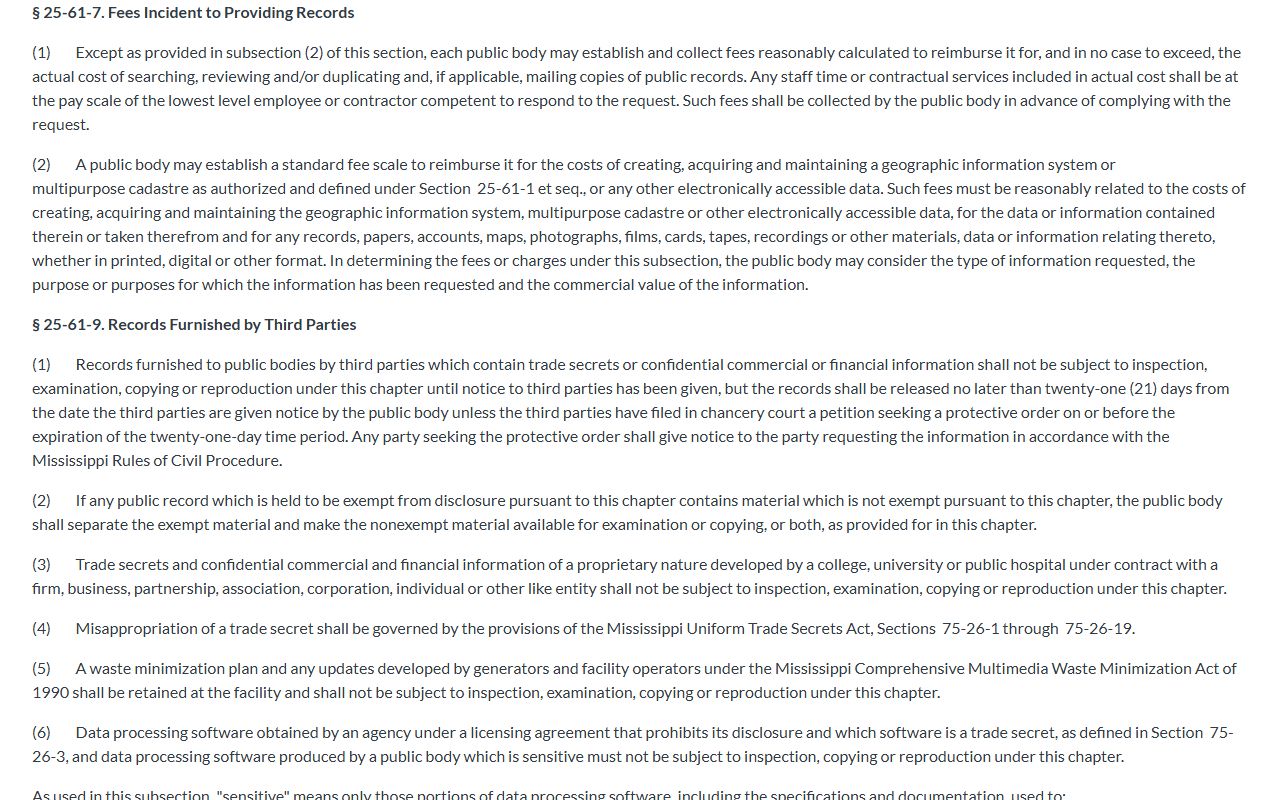
The table reflects the rates the county publishes for copies of recorded and filed documents. No separate Lauderdale County probate filing fee schedule is published by the county, so confirm filing costs with the Chancery Clerk before submitting a petition.
| Item | Amount |
|---|---|
| Copy made by a member of the public, per page | $0.25 |
| Copy made by office staff, per page | $0.50 |
| Certification of a copy | Additional fee |
| Mailed copy request | Copy fee plus stamped self-addressed envelope |
For a mail request, the county asks that you reasonably identify the document, include a check or money order made out to the Lauderdale County Chancery Clerk, and enclose a stamped self-addressed envelope for the return. Certified copies cost more than plain copies, so ask for a total before you send payment.
What Lauderdale County Probate Records Show
A probate file grows as a case moves forward. Early documents open the estate or name a guardian, and later filings track the assets, debts, and final distribution. The exact contents depend on whether the person left a will and whether the matter involves a minor or an incapacitated adult.
A typical Chancery probate or estate file may include the items below.
- The original will, if one was filed, along with any codicils.
- The petition to open the estate and the order admitting the will to probate.
- Letters testamentary or letters of administration naming who may act for the estate.
- An inventory of estate assets and an appraisal of property.
- Notices to creditors, claims filed, and accountings of money paid out.
- The final decree closing the estate and approving the distribution.
Guardianship and conservatorship files follow a different track. They include the appointing order, reports on the ward's care or finances, and any later petitions to change or end the arrangement. When an estate holds real property, the related deeds and liens are recorded separately and can be pulled through the official records portal. Those recorded instruments connect a probate case to the wider body of court filings the county maintains.
Restricted Lauderdale County Probate Records
Not every probate-related file is open for public inspection. Mississippi law makes certain records confidential, and the Chancery Court enforces those limits. Adoption files are restricted because they involve minors and family status. Guardianship and conservatorship files that contain medical or financial detail about a protected person may be sealed in part. Mental health, drug, and alcohol commitment matters carry the strongest privacy rules, since they include health information that is not ordinary public material.
The Public Records Act does not override confidentiality created by other laws. The state page that lists exempt and privileged records is shown below.
Review the exempt records section of the Public Records Act to see which categories a clerk may withhold.
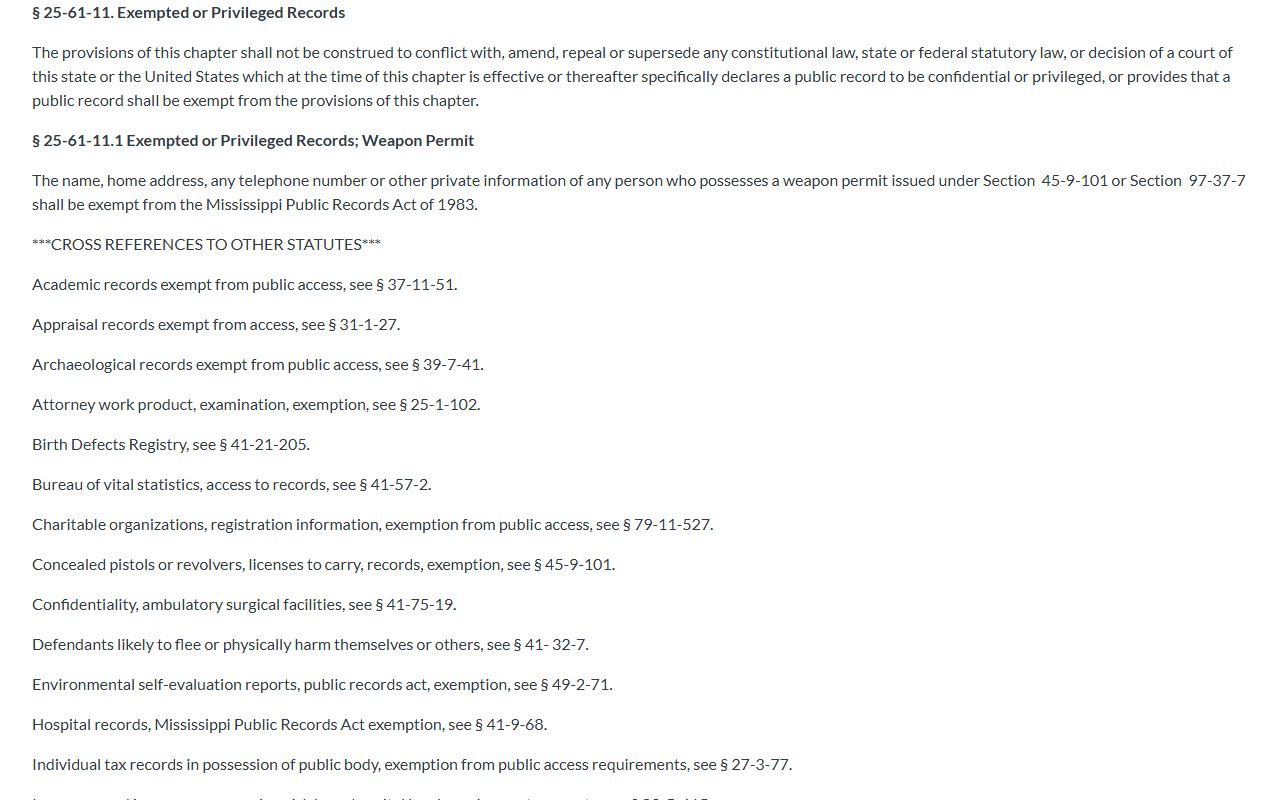
Under those provisions, the clerk releases the open parts of a file and redacts the rest, such as Social Security numbers, birth dates, and details about a minor. A person who is the subject of a sealed record, or that person's attorney, may have access the general public does not. Probate often runs alongside a divorce or estate division, and certified copies of related divorce decrees come from the same Chancery Clerk, while marriage licenses are issued by the Circuit Clerk. When a record is confidential, the clerk can explain what part, if any, may still be viewed.
Note: Sealed and confidential probate files stay closed even when an index shows the case exists, so plan to verify access rules before you travel to the courthouse.